
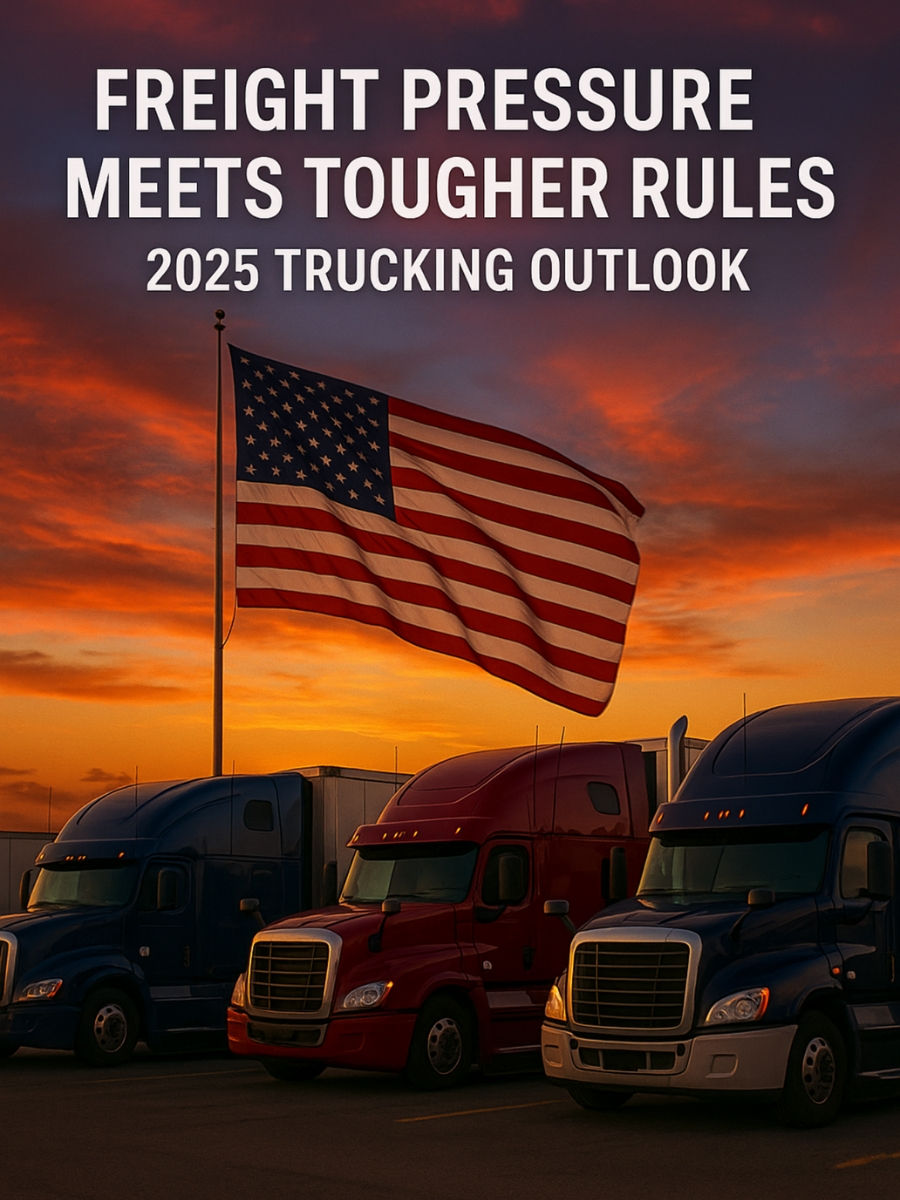
FREIGHT PRESSURE MEETS TOUGHER RULES: TRUCKING’S TWO-FRONT BATTLE IN 2025
- jolayemidamilarese
- Oct 29
- 2 min read

America’s trucking industry is caught in a squeeze like never before. On one side, the freight market is tightening with too many trucks chasing too little freight. On the other, new environmental regulations are reshaping every aspect of fleet operations, pricing, and planning for the years ahead. Together, these forces are pushing trucking into a new era of challenge and change.
The freight market itself remains under pressure. Reports from ACT Research show freight volumes holding steady but soft, while carrier numbers still outpace load availability. This imbalance keeps rates low, sharpening the battle for every shipment. In 2024, the American Transportation Research Institute recorded average operating costs climbing to an all-time high of $2.26 per mile. The rise isn’t just about fuel; non-fuel expenses like insurance, tires, and repairs are at record highs—offsetting any benefit from recent fuel price dips. Some say relief may come later in 2025 as smaller fleets tighten capacity, but experts warn this recovery will be slow and uneven.
Meanwhile, regulations are bringing new costs and complexity. The EPA's Phase 3 greenhouse gas standards, set for 2027 to 2032, demand cleaner engines and innovative tech, but at a higher upfront price. California leads the charge with zero-emission mandates forcing fully electric trucks for ports and drayage by 2035—a trend that may ripple nationwide. Fleets already estimate that newer models could add $15,000 to $25,000 per vehicle in costs under these rules. Beyond the price tag, compliance reporting and emissions tracking add administrative burdens, hitting smaller operators the hardest. The American Trucking Associations advocates phased timelines, emphasizing that strict regulation without supportive infrastructure risks sidelining the very fleets that keep commerce moving.
Where freight pressures meet regulatory demands, the stakes grow high. Low rates paired with rising compliance costs create a survival test for carriers. Larger fleets have the scale to spread these costs, but smaller, independent operators face tough choices. When to upgrade equipment becomes a gamble: buying early risks losing value if trucks don’t meet future standards, but waiting too long could mean operating restrictions in critical freight zones. This tension accelerates fleet consolidation and reshapes industry winners and losers.
Yet amidst these challenges, there is opportunity. Forward-thinking carriers are embracing the future: harnessing telematics and predictive maintenance to extract more efficiency from each mile, transitioning to greener fleets as regulations ramp up, and marketing sustainability as a competitive advantage. Those who adapt, automate, and align early with emissions goals won’t just survive—they will thrive as the market stabilizes.
At TruckPort USA, we understand the pressures and evolving landscape that drivers and fleets face. Our commitment is to provide more than just parking—we offer secure, affordable rest hubs equipped for today’s trucking realities, helping truckers keep moving no matter how tough the road ahead.
TruckPort USA — The Nation’s Trusted Network for Safe Truck Parking.
Visit us at TruckPortUSA.com.


Comments